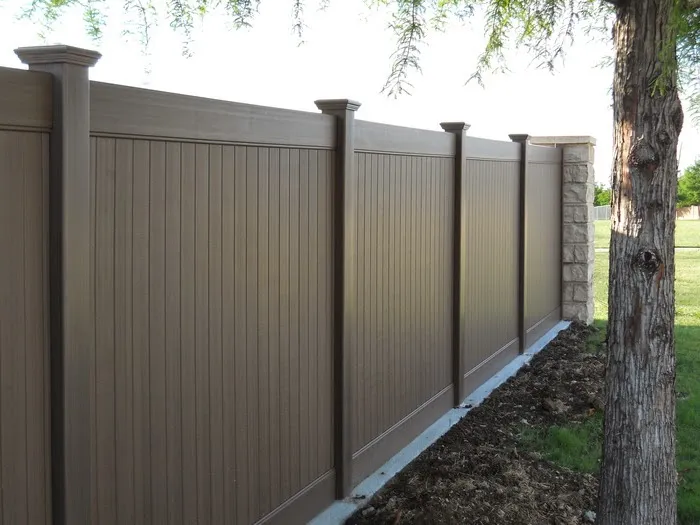
In Salt Lake City, yes. The zoning code (section 21A.40.120) says a building permit must be obtained before a fence is built. Other cities in the valley have their own rules, so the answer changes when you cross a city line. We check the rule for your address before work starts.
Do I need a permit to build or replace a fence?
Salt Lake City's code calls for a building permit before any fence goes up, so the city can check it against the fence rules. A permit fee applies to fences and walls over 6 feet and to masonry or engineered walls. The code does not carve out a like-for-like replacement, so ask Building Services before assuming a rebuild is exempt. West Valley City, Sandy, West Jordan, South Jordan, Murray, Millcreek, Taylorsville, Draper, Holladay, Cottonwood Heights and Bountiful each have their own code. Our town pages name the office for each.
How tall can my fence be? Is 6 feet allowed?
Yes, in back and side yards. Six feet is the standard privacy height in Salt Lake City, and the city's planning guidance tells homeowners to expect up to 6 feet at the side and rear. The current code text sets the top limit at 7 feet for a fence at or behind the front face of the house, and anything over 6 feet needs a permit with a fee. Between the front lot line and the front of the house the limit is 4 feet. On a corner lot, a solid fence is held to 3 feet inside the sight triangle, which runs 30 feet each way from the intersection, and to 30 inches beside a driveway or alley.
How close to the property line can I build? Do I need a survey?
Most fences are built on the line by agreement or a few inches inside the owner's side. Nothing we found in the city code requires a survey for a fence, but you are responsible for building on your own land. If the boundary is not marked, or you and the neighbor see it differently, get a plot plan or a survey before any post goes in. On older Salt Lake City blocks, fences along alleys have often drifted from the true line.
I live in a historic district. What can I build?
In a local historic district, the Salt Lake City Planning Division has to approve the fence before a permit is issued. The application is called a Minor Alteration. The Avenues, Capitol Hill, Central City, South Temple, University and Yalecrest are examples. The city encourages keeping an original fence where it can be saved. For a new one, wood picket, simple wood privacy fence behind the house and ornamental metal are the easier designs to get approved, and all of those can be done at a moderate price. A house that is only in a National Register district does not need this approval.
Can my condo association or HOA restrict my fence?
Yes. An HOA can set the height, material and color, and its rules apply in addition to the city's. This is common in Daybreak, in Draper's hillside communities and in newer subdivisions on the west side. Get the approval in writing before materials are ordered.
We are adding a pool. What fence does code require?
A barrier all the way around it. Salt Lake City lists the International Swimming Pool and Spa Code among its adopted codes. That model code calls for a barrier at least 48 inches high, no more than 2 inches of clearance under it, no opening a 4 inch ball can pass through, and gates that swing away from the pool and close and latch by themselves. Utah or your city may amend details, so confirm the numbers with your building department before the fence is built.
The inspector failed my existing fence for the pool. Who brings it up to code?
A fence contractor. Pool companies rarely do fence work. Typical corrections are self-closing hinges, a pool-rated latch at the right height, filling gaps at the bottom and raising or replacing sections that are too low or easy to climb. Send us the inspector's written notes and we price exactly what is on them.
My association only allows a 4-foot open fence, but I want privacy. What are my options?
Start inside the rule. A 4-foot open fence with shrubs or tall grasses behind it gives privacy within a few seasons. A taller screen close to the patio may be treated differently from a boundary fence, so ask. If neither works, request a written variance from the board. Also look at your plat for utility or drainage easements. A fence across an easement may have to stay out or be built so it can be removed.
Who calls 811 before digging, me or the contractor?
The one doing the digging. In Utah the service is Blue Stakes of Utah 811, and the law is Utah Code Title 54, Chapter 8a. The excavator must give notice at least 48 hours before digging and no more than 14 days ahead. The 48 hours count business days only and start at 8 a.m. on the next business day, so Blue Stakes tells people to ask at least three business days ahead. A ticket is good for 21 days. When we build your fence, we make the request. Blue Stakes members do not mark private lines such as sprinklers, yard lighting or power to a shed, so show us where those run.
My contractor wants to skip the permit and reuse the old holes. What is the risk?
The risk is yours, not theirs. If the city finds a fence built without a required permit, it can order changes, and the property owner has to deal with it. It can also surface in a sale. Old holes are a second problem: they are often too shallow, which is why the first fence failed.
The city says my existing fence breaks the current rules. Can I just repair it?
Possibly. Cities often let an older fence be maintained and require a full rebuild to meet today's rules, but the building or zoning office makes that call for your case. Ask them in writing before you decide between a repair and a new fence.
The only way to get a real price for your yard is a free on-site estimate. Call (385) 402-8455 or text us a photo of the fence line.