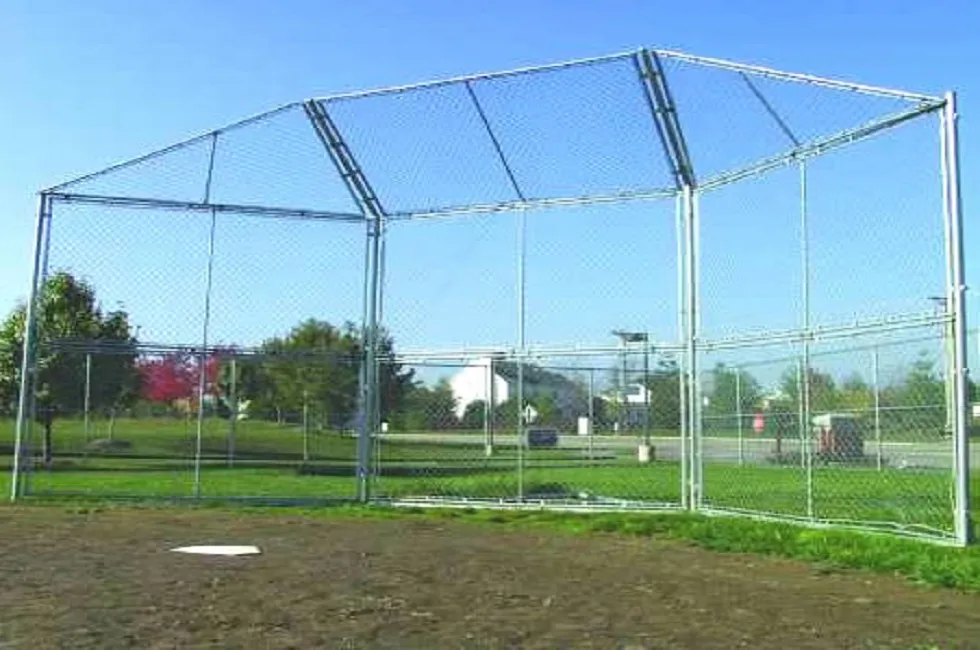
A backstop is a tall chain link structure, often with an overhang, that takes hard hits and heavy wind for years. We build them for schools, parks, churches and leagues around Salt Lake City and the valley. Each one is laid out to the field: the distance behind home plate, the height, the wing length down each baseline and whether a hood is needed to keep foul balls out of a street or parking lot.
Footings carry the job. Backstop posts are large pipe set in deep concrete, well below the frost depth, because the frame is tall and the mesh catches wind. Fields on the valley floor often sit on soft, irrigated ground, so we look at drainage around each footing. On the benches the issue is cobble, which slows drilling. We check both before pricing.
Spring is short here. Fields open as soon as the snow is gone, and everyone wants repairs done in the same few weeks. If a backstop has curled mesh at the bottom, bent top rail or loose ties, the best time to call is fall or winter. We also add dugout fencing, player gates, fence-top safety cap and baseline fence when the backstop is built.
Backstops in Salt Lake City: common questions
How tall should a backstop be?
It depends on the age group and what sits behind the field. We size it with you on site and include an overhang where a road, a parking lot or houses are close.
Can you repair a backstop without replacing it?
Usually. Mesh panels, top rail, ties and bottom tension wire can all be replaced on a sound frame. Bent or rusted-through posts are the reason to rebuild.
Can the work be done in winter?
Often yes. Frozen topsoil slows digging but does not stop it, and off-season work means the field is ready for the first practice.
How it works
- Free estimate: Call, text or book online. We visit, measure and talk through options.
- Written quote: Clear pricing with material choices side by side.
- Permits & planning: We check local rules and help with permits before we dig.
- Install & clean-up: Our crew installs, cleans up and walks the finished fence with you.